Architecture consulting in software engineering
Evaluation of system structures and development processes
For years, the costs associated with poor software quality Cost of Poor Software Quality (CPSQ) have been rising globally;
at the same time, the increasing complexity of technical systems demands targeted management:
system environments, requirements, and products are constantly changing and evolving.
Without active management, various phenomena emerge, including one that can be observed across industries and follows a nearly textbook pattern
(see figure 1).
We analyze development processes and methods and develop management tools for software-driven organizations
with the goal of systematically improving quality (stability, performance, and adaptability).
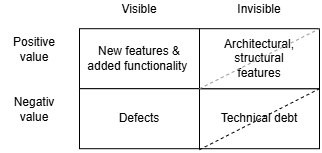
figure 1: The phenomenon of “technical debt” (Kruchten et al., 2019)
The reasons behind the phenomenon of “technical debt in software engineering” have been described in detail;
a key cause is project-based funding, which leads to the prioritization of requirements that generate direct business value (project benefits).
Software quality metrics (such as maintainability > modularization and isolation) are therefore severely underrepresented.
Formulated quality goals and measured metrics drift apart; the resulting discrepancy can be measured at the organizational level.
Source:
Kruchten et al. (2019),
Kruchten, Nord & Ozkaya (2012)
The pattern:
Neglecting quality requirements increases development costs, reduces productivity, and
slows development velocity. Error‑correction efforts begin to exceed feature development, externalization rises, and
architectural erosion accelerates. Missing strategic direction amplifies the effect and weakens competitiveness.
The severity of this dynamic depends on system architecture, development practices, and organizational conditions.
Research confirms the underlying mechanisms: architectural erosion, rising error costs, declining productivity,
strategic impact, and organizational influence in (Technical Dept Management).
“Software quality is dynamic and the result of active management.”
We view architecture consulting as decision support within system and software engineering - bringing
together organizational goals with (socio-)technical and methodological insights and
capabilities to establish a suitable framework for competitive and predictable software development.
We assist organizations in the planning and execution of system and software projects,
as well as in technology-related decisions.